Wednesday, May 22, 2019

What Bugs Me?

There are a few things that continue to puzzle me about how the way I see things are not lining up with the way others see things. It's not about having differences of opinion. Differences of opinion are healthy in that many times discussing differences results in better understandings. This happens when new facts are brought to light and allow for a usually reluctant change of mind. When I have an opinion, I try to look for evidence that supports that opinion and, lately, there have been a few things happening that confirm what I believe and yet seem less than convincing to friends with alternate points of view.

An area of concern for me is climate change (global warming or whatever you may want to call it), Although the matter has been studied for over fifty years and the vast majority of scientists who study it agreeing on the issue, there are still a lot of folks who question if it is real. We even elected a president who claims it;s a hoax. Oddly enough this issue has become a partisan one with one party more likely to say climate change is happening and the other saying "not so". It's at this point that I look to the natural world I love and believe God has created for some clue as to the reality of the situation.

Although it will not likely change anyone's mind, I've observed a definite change that nature is showing me that confirms what I believe about climate change. When my first wife and I moved into the home we built with the help of friends and relatives we noted that the first sighting of fireflies (lightning bugs if you prefer) occurred within a day or two of her birthday, June 10. She has been called to her final reward. However the fireflies still hibernate each year and begin their amazing courtship light show every year. I saw the first firefly this year on May 20, a full twenty-one days earlier than forty years ago. Will this change that has gradually taken place make any naysayers believe climate change is real and needs our attention. I believe it should. God gave us this whole world over which we are to be good stewards. Let's admit we did a poor job of it and repent.
Image result for fireflies

Wednesday, May 8, 2019

Raking It In

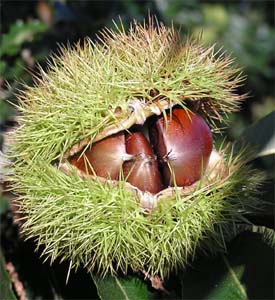
If you have followed my blog, you've probably picked up on the fact that I like writing about the things my grandfather Eli did and also about his concern for the loss of the remarkable American Chestnut tree. I believe he would be pleased with the efforts being made to develop a blight-resistant tree that will hopefully be reintroduced into the forests where its ancient relatives once dominated. Granddad often spoke about the wonderful qualities of Chestnut wood and the great versatility it provided, being used for practically any wood projects as well as coming from a tree that bore copious quantities of nuts for animal and human consumption.

Granddad was the last generation to essentially live off the land, never having what you would describe as a occupation. He lived by growing food, hunting, fishing and selling the occasional load of mine ties or props from the forest.  In this way, he and his wife provided for their family of eight children, all of whom are no longer living. It was a very different era, one filled with simple pleasures and plenty of hard work. Granddad had hay fields that, for the most part, were mowed and raked by hand and then the hay was hauled into the barn for animal sustenance during the winter months. The raking of hay was accomplished with a wooden implement, often homemade from materials at hand and one of those rakes survived on display on my back porch for the last forty years or so. A couple weeks ago, I found it on the porch floor apparently dislodged form where it hung by some critter (I suspect a Phoebe trying to find a nest site). The handle (a not perfectly straight sapling) had broken off where it joined the head beam and the two bows that jointed the handle to the beam had shattered.

I'm in the process of repairing the relic, not so much because I want to rake hay but because it reminds me of from where I've come. A couple of the teeth had been missing from the time I hung it up there so long ago and I've replaced them and reshaped the end of the handle using a draw knife that no doubt has felt the sweat of Granddad's hands a long time ago. Then almost as though I'd never seen it before, I realized that the beam of the rake was fashioned from a piece of , you guessed it, American Chestnut. How appropriate; a memory that reminds me of my past and within it a piece of that precious wood that Granddad figured would be no more.

We must always consider what our purpose is in being given the lives we live here on Earth. In some ways that was easier in Granddad's era. His purpose was to do what was required to keep himself and his family in provision. I believe he understood that all the provision came from God and even though he had to do the hard work, God provided the means and material. Once the rake is back together and in its place, it will be an even stronger reminder of the gratitude we all must have for those from whom we're descended and the everlasting faith we must have in a loving God.
Image result for wooden hay rake

Wednesday, April 17, 2019

Empty Cross

When I was approached by one of our church elders concerning the possibility of having an Easter sunrise service on our property, I was more than happy to say, "Sure." I spent some time thinking about just where might be the best spot to have the service and, once decided, considered how the site might be arranged. The plan emerged: some rustic seating and, as an afterthought, a matching lectern.

With the help of my son, a necessary ingredient more and more these days, we got to work. We were the beneficiaries of some good sized Hemlock logs due to the wind storm a year ago and used the trusty Woodmizer sawmill to slice two of them end to end. They became the rustic seating I had in mind. Once on site, we wrestled those half logs onto some short pieces and decided that they were plenty comfortable. Of course anything to sit on would have been ok by that time.

The lectern was to be made of two big chunks of White Oak that had been discarded because we ran into iron in the log when sawing back in October. The shorter piece intended for the top of the lectern already had one flat cut on it so that a second cut not quite parallel to it allowed it to sit atop the larger piece with a sloping surface on top. Once in place, Jon looked at it and said, "There's a cross on this." Sure enough; the stain that developed on the surface as a result of the iron weathering for months had left an undeniably cross shaped pattern. A small circle off to the side, also caused by the stain reminded us of the empty tomb that was discovered on that first Easter morning almost 2000 years ago.

One of Jesus' promises was to be with us always and little reminders like the stain on a piece of weathered wood keeps us aware of how He keeps His promises. We celebrate the empty cross. We celebrate the empty tomb. He is risen and His promise of eternal life will not be denied. I pray that you have a blessed Easter and remind one another of the power of the resurrection every day.

Wednesday, April 10, 2019

A Valuable Post or Two

If you have been following my Out of the Woodwork missives for a while, you know that one of my interests is in the restoration of the American Chestnut tree. I recently attended the spring meeting of the Pennsylvania/New Jersey chapter of The American Chestnut Tree Foundation and enjoyed seeing some well done woodworking using salvaged Chestnut. Because of the durability and rot resistance of Chestnut wood, there is a good bit of it around in old buildings. Chestnut was satisfactory for anything from the framing to the final trim and a considerable amount could be gleaned from a timber framed barn for instance.

But then another source became evident as I perused the hand crafted items on display. A woman was displaying items her father had made from salvaged fence posts. Because of its rot resistance, Chestnut was favored for fence posts and rails, many of them still sound although in use for over fifty years. One item on display was a simple yet delightful bud vase made by taking a short piece of old fence post, drilling a hole to accept a test tube and sanding and polishing the end grain. The contrast between the weathered surface of the post and the clean darker end grain showing the distinctive growth rings was eye catching.

Much to my delight, I came across an old fence row this week and although the barbed wire has mostly rusted away, the posts looked pretty solid. What do you know? These posts have been in the ground for at least fifty years and are as sound as the day they were put in. Although I won't be getting a big pile of lumber from them, these links to the past will provide material for a good number of small items that can be sold for the benefit of the efforts to restore what may well be the most valuable hardwood we have ever known.
Image result for chestnut projects

Wednesday, April 3, 2019

Why Nut

One of the things to which I look forward is the spring meeting of the Pennsylvania/New Jersey chapter of The American Chestnut Tree Foundation. That will be coming up shortly and once more, I'll be reminded that there's always more to learn about the magnificent "Redwoods of the East" that, at one time, dominated our forest, constituting one out of every four trees in Pennsylvania. Think about that. In 1900, if you went into the forest in most of the American Chestnut's range (Georgia to Maine), and counted the trees as you came to them, every fourth one would have been a Chestnut tree. The tree was an undeniable asset to all who needed wood for almost any purpose and the nut crop was desired by human and animal alike.

By 1950, virtually every American Chestnut tree was dead. A blight arriving on American shores on imported Asian Chestnut trees did a quick and thorough job of eliminating what had sustained early settlers and citizens for hundreds of years. The efforts to develop a blight resistant tree with the characteristics of the original American Chestnut is ongoing and is the thrust of The American Chestnut Tree Foundation. The efforts to get a forest that once again is home to these wonderful trees has been supported by a true grass roots movement to reestablish something that was considered so valuable and now unknown by most who are alive today.

Knowing that there was such a thing as The American Chestnut Tree Foundation piqued my fascination. My father and grand father spoke often about the wonderful Chestnut trees and how the lumber from them was used for everything. Some buildings were made with no other wood, Chestnut finding its way into everything from the sill to the roof shingles. My grandfather's theory on the matter was simple. God had provided the Chestnut tree and, as is typical, man was not fully appreciative, So God took it away. To an extent, Granddad was right. Today, through the efforts of so many individuals, we are close to having a blight resistant tree that has most of the characteristics of the trees former generations had come to believe would always be around.

The efforts of the foundation are admirable and deserve support. I encourage you to take a look at work being done and support it. The work of the foundation mirrors the very essence of God's ways. We failed to appreciate what He had provided and, for awhile, the provision was withheld. The promise of those working in the foundation is to not be careless with our stewardship of all that we have been given. A personal piece of the program is an experimental orchard within walking distance to our home planted with hybrid Chestnut trees. I'd be pleased to have you take a look at it. 
Image result for chestnut tree

Wednesday, March 27, 2019

Medicated

I had an interesting interaction today as a result of visiting my family doctor and attempting to get the followup prescription filled. The pharmacy where I usually get prescriptions filled informed me that they did not have the requested medicine and would not for some time. Helpfully, they indicated that the next pharmacy down the road (it's a hike to get such stuff out here, but I like the trade off) would be able to fill the script. What happened next was an eye opener, at least for these bleary old eyes of mime.

The prescription, of course, had the doctor's name on it. I was asked for my birth date and told the script would be filled in about 20 minutes. As I wandered across the street to confirm that the few items I needed were less expensive where I usually shop, I thought, "How will I ask for my meds at the pickup counter? They never asked for my name." Sure enough, "What is the name?" was the question when I asked if my order was ready. The order was ready and it came labeled with my name which is pretty spooky since I had never been in that store before or even one of the stores in that chain of drug stores. I suppose the 20 minutes involved a call to the doctor to confirm that the script was legitimate. Spooky still.

It occurred to me that lots of folks know lots about us and we may as well get used to it. Then I remembered that we have One who knows everything about us. Most importantly, He uses that knowledge only in ways to confirm His great love for us. I can't get too concerned about what "Big Brother" knows about me. My loving Father knows all there is to know about him too and will work even that out for those who love Him. Gotta go take some pills now. Hope you enjoyed the story.
Image result for prescription

Wednesday, March 20, 2019

Plane and Fancy

One of the first things that happens when boards come into the shop destined to become the project at hand is to plane those boards down to the desired thickness. So it was with some disappointment a few days ago that turning on the planer resulted in an uncomfortable silence in what is usually a very noisy machine. How could this be? That machine is only 25 years old or so. Truth is, we've been operating on borrowed time for a while now. After checking out the incoming voltage and connections, my son Jonathan and I figured the old motor had just given up. It began to look like the 200 board feet or so of lumber we hoped to have ready for next weekend would not get even the first step on their way to being the wall paneling we hoped to install.

Removing the motor was pretty straight forward although, weighing in at about 100 pounds, it was challenge enough. In the mean time, a great friend offered us the use of a smaller planer that he had in his shop. Today, Jonathan and I ran the boards through the generously loaned machine noting that though plenty wide enough, the amount the machine could remove in a single pass was considerably less than it's disabled big, motorless brother. After two passes through the borrowed machine, I checked my phone and the message from the motor repair shop was just what I wanted to hear. Just a bit over 48 hours after dropping the motor off, it was repaired and ready to be picked up. You better believe, I'll talk that repair shop up.

The planer is back in business and that loud noise it makes is somehow not nearly as annoying as it seemed to be. If it's possible for a siren-like 90 decibel noise to sound like music, that's what's happening now. Barring any other breakdown, we should be on schedule to have our material ready for the weekend. We will move forward assuming that will be the case. One thing that has been present in the whole situation is an attitude, on my part, of understanding that all our circumstances are under God's control. He wanted us to experience a slowdown and acceptance that all our plans must somehow fit into His grand plan. I'm grateful to be able to use the planer again and just as with His presence, I appreciate it a bit more.

Image result for surface planer machine